
Have you ever looked at the balcony of a house and suddenly your eyes stopped? There is something special there. That is Dipladenia. Seeing these flowers, you often think, why shouldn’t we plant such beautiful plants? Many questions come to mind.
What is this Dipladenia? (And the confusion about the name Mandevilla)
Many people got confused among these. Why are both the same? Then I read a little, asked, and found out that these two are siblings. From the same family, but with different natures.
Dipladenia Plant:
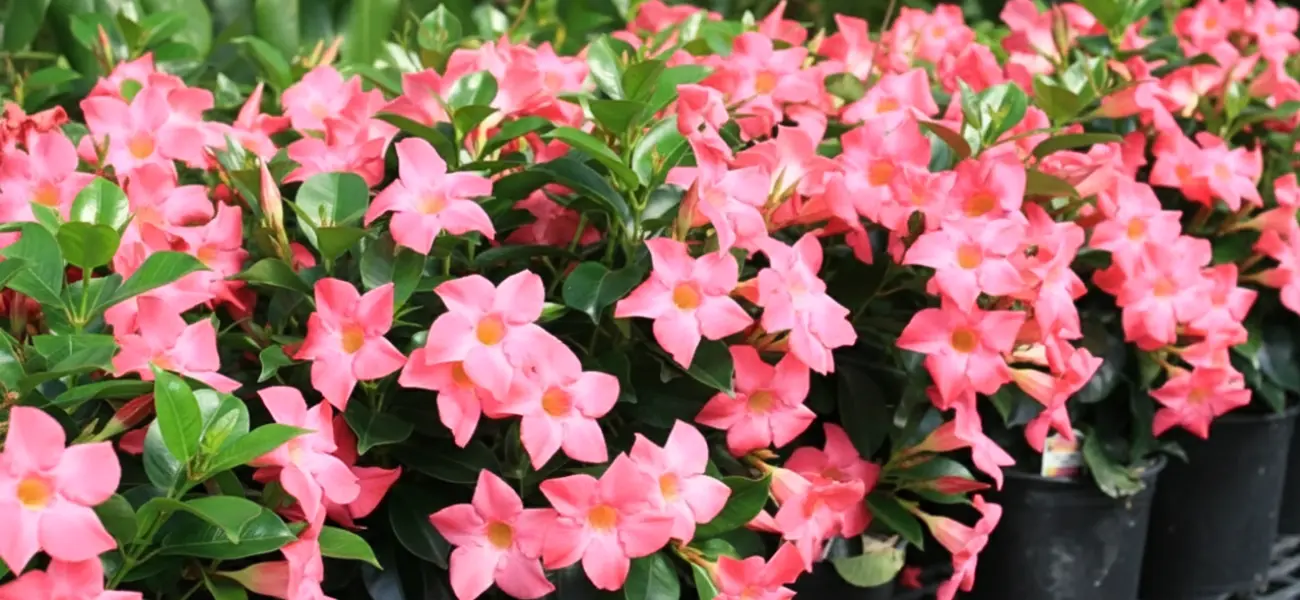
This has a bushy or slightly drooping growth habit. It does not climb much. The branches spread out to the sides. The leaves are small, glossy and dense. The flowers are also relatively small but dense. It is best for planting in a pot. It does not need much support.
Mandevilla:
This is a true vine. If it is cared for so well then it will climb quickly. Mandevilla’s flowers are larger as compared to flowers of Dipladenia plant. Its leaves look so large and rough but it needs space and a strong base.
Dipladenia is a bit of a straight nature. It does not climb much, it grows like a bush. The flowers are also small but dense. It grows neatly if you put this plant in a pot. On the other hand, mandevilla is a real vine. It spreads everywhere if given some strong support.
Its flowers are very small trumpet-like. It’s as if someone is ready to sing a song.
Why do you want this in your house, on your balcony?
If you are still in doubt whether to get this plant or not, then let me tell you some special reasons.
It blooms. The biggest thing is that it blooms from the beginning of summer. Every morning you see a new bud blooming in a pot.
It doesn’t need to worry much. I tell you, when a simple person like me can grow it, you can also grow it.
A wide and attractive range of colors. Vintage pink, dark red, snow-white, and even nowadays peach colors are available. It’s a pleasure for the eyes.
Here are some main factors where you can check to make its life longer.
Sunlight:
Sunlight is its friend, but sometimes its enemy. Dipladenia is like a girl of the sun. She loves the sun a lot. But like a beloved girl, she also needs sun in moderation.
It needs four to five hours of direct sun in the morning. But after noon, there is light shade. If you put it in a place where the scorching midday sun hits it directly, its leaves burn.
Water quantity for this plant:
Don’t water it on a regular basis. My first ever dipladenia planten has died because of this mistake. But its roots drowned. Then I learned that you don’t want to keep it ‘soaked’.
The rule is very simple.
In summer:
Watering two times is enough, but if you see there is dryness then you can add more water.
Another important thing. When watering, always water the soil. Do not splash water on the flowers or leaves. In the sun, that water acts as a lens and burns the leaves. Moreover, there is also a risk of fungus on wet leaves.
Fertilizer and pruning:
If you want as many flowers as possible…
If you want your Dipladenia planting to be fully bloomed, nicely rounded, you will need to give it a little ‘food’.
What kind of pruning for this tree?
When we say pruning, we think, oh, do we have to cut down the tree? But this pruning is like giving the tree the necessary discipline.
Withered flowers:
Keep removing the withered flowers. This saves the tree’s energy for new flowers.
At the end of winter: In February, cut off the long branches of the tree by one third. This will encourage the tree to grow new branches.
The leaves burst and become thicker.
Pests and Diseases occurs in this plant:
A little care, immediate relief
Many times, it is also attacked by pests. But it is so common, just simple precautions can help to keep it clean throughout the year.
Red spider mite:
It looks like a web on the leaves. The leaves start looking dirty. Remedy: Spray neem oil or soap water (mixed with liquid soap).
Mealy bugs:
These look white, cotton-like.
In the pot or in the soil? My experience and Dipladenia Care
I have tried both. But I prefer the pot.
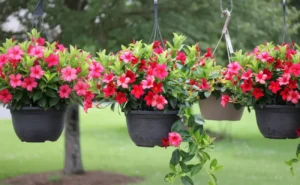
This allows the roots to get air. I plant it in a large pot and put a small round support (trennis) next to it. The support is trellis. Its vine climbs on it and looks very round in bloom
Frequently Asked Questions
1. Can this plant be kept indoors in both seasons?
Yes, if you want to keep it indoors then keep it near the window, where it can get easily direct light, if you keep it indoors, then flowers on it grow less than outside. Sunlight is the main companion of these flowers.
2. How big does it get?
Depends on the type. The bush-like Rio Dipladenia plant grows to about one meter.
3. Is this safe for animals like cats and dogs?
No. It is slightly poisonous for animals. If you have pets then keep it away from these pets, because if they swallow, it can make their stomach upset.
4. When leaves are turning yellow rapidly and falling off?
There can be many reasons: cold and excessive water, or lack of sunlight. If it is cold, bring it inside of the house.
5. How to make new plants of this plant?
It is very easy like a cake. Cut branches (about 15 centimeters) in early summer. Plant this branch in the soil or give it water for the first time. A new plant will form in a few weeks. Try this experiment, it gives a lot of satisfaction.
Diplodenia is not just a tree. It is a companion. I do not expect much. And in return, it decorates your balcony, your house like a festival.
Seeing my Diplodenia blooming on my balcony today, I think that sometimes even small things give great satisfaction. If you plant this tree, do let me know. Let’s chat about these flowers, leaves, and greenery.